 |
| Moss Rose, a Flowering Succulent Plant |
Showing posts with label Elegant Gardening. Show all posts
Showing posts with label Elegant Gardening. Show all posts
Wednesday, July 20, 2011
Friday, June 24, 2011


Friday, June 17, 2011
June Gardening
June Gardening, Northern Hemisphere
| Posted on June 7, 2011 at 2:25 PM |

There are good and bad days for certain gardening activities, according to the moon.
June, 2011
5th-8th These are bad days for planting. It's now a good time to eliminate pests, and to cut down brush.
9th-11th Good days for planting seeds for above-ground food-crops and flowers.
12th-13th Very good days for planting leafy greens. Any above-ground crops planted during this period should do well.
14th-16th Avoid all planting. These are good days in which to do hay-cutting, perform administrative duties and to engage in general farm-work.
17th-18th Plant root-crops such as potatoes, celeriac, carrots and beets.
19th-21st Poor days for any sort of planting. Kill plant-pests, fertilize, and do general farming chores now.
22nd-23rd This is a good period in which to plant late root-crops and vines. Set strawberry plants now. These are favourable days during which to do transplanting.
24th-25th These are barren days on which it is favourable for plowing and cutting hay.
26th-27th Good for planting root-crops, and for transplanting.
28th-29th Do no planting during these days; seeds planted now will likely rot in the ground.
30th June: this is the best day of the month for planting root-crops, and will be excellent for sowing seed-beds and all transplanting.
©Elegant Gardening

Monday, June 6, 2011

Monday, May 30, 2011
Planting Planner for This Week, Northern Hemisphere

Aloe Vera Plant
May 30th-31st Transplant now, and plant root-crops.
1st 2nd June: Do not plant seeds during these two days, Wednesday and Thursday.
3rd-4th of June: Fruitful days for planting corn, tomatoes, cotton, beans, capsicums, hot-peppers, all above-ground crops, seed-beds and flower-gardens.
Thursday, May 26, 2011

Sunday, May 22, 2011

Thursday, May 19, 2011
Growing Strawberries in Sweden

At my cousin's estate outside of Goteborg, Sweden, strawberries are grown with straw around them, and will usually be ripe around Midsommarafton or Midsummer Eve (June 24th this year).
©M-J de Mesterton
©M-J de Mesterton
Wednesday, May 18, 2011
Auguste Renoir Roses

These luxurious specimens are from my old Auguste Renoir rose-bush.
©M-J de Mesterton

©M-J de Mesterton

Boxwood, Impatiens, Holly, Ivy and Hostas

My Princeton garden with impatiens set among the boxwood, ivy and myrtle, together with hostas and holly bushes.
Busy Lizzies, also Known as Impatiens

Impatiens flowers like to spread, and make good ground-cover plants in shady, moist environments.
©M-J de Mesterton
 My Garden of Boxwood, Ivy, Myrtle, Hostas, Holly and Impatiens.
©M-J de Mesterton
©M-J de Mesterton

©M-J de Mesterton
The Elegant Hydrangea Bush

Hydrangeas can be blue, white, lavender or pink, depending upon the soil conditions where they are planted, and what they are fed.
©M-J de Mesterton.
©M-J de Mesterton.
Elegant Solar Lamps in the Garden
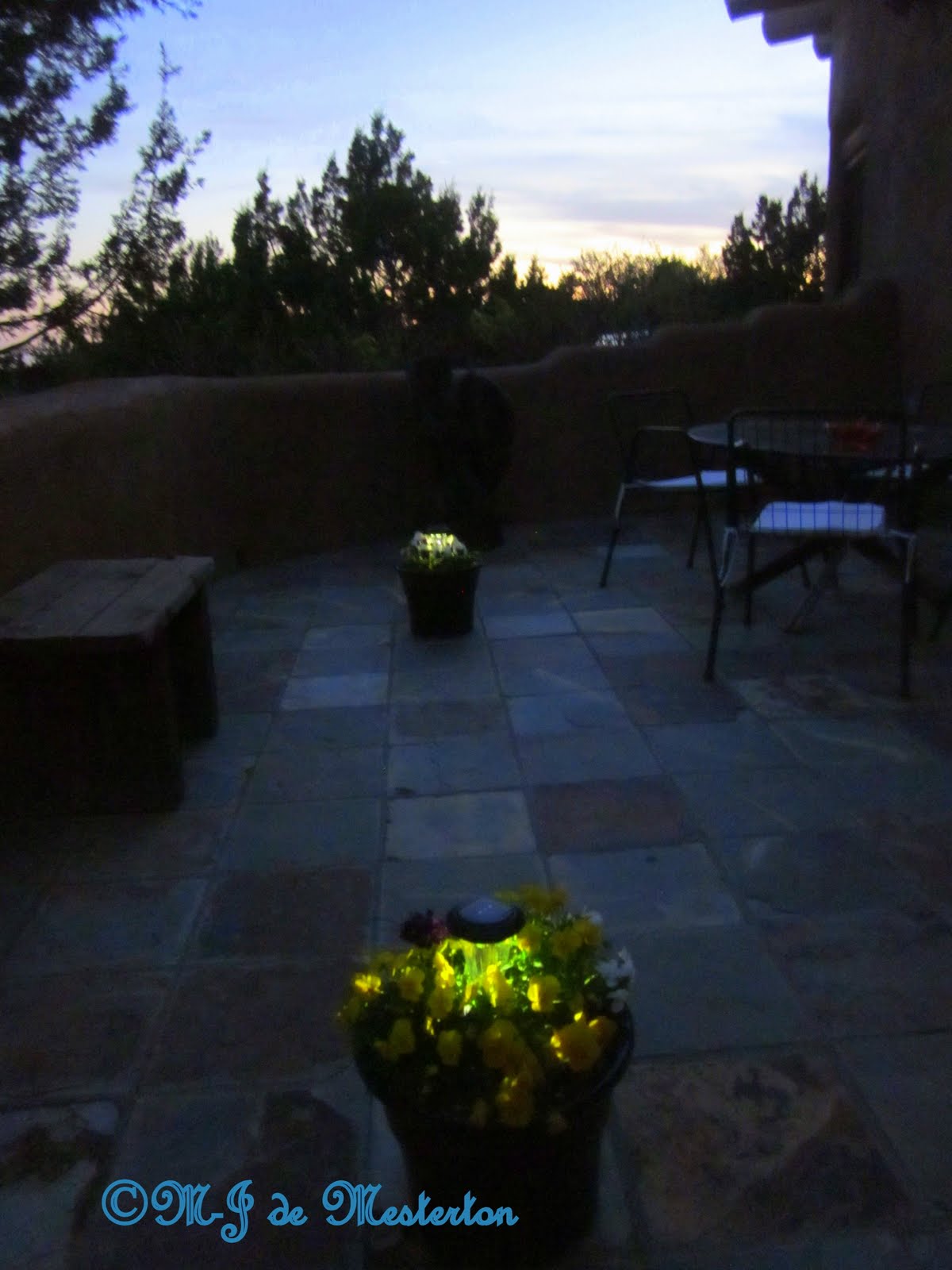

Situated in pots, alongside paths, or in vegetable garden-plots, solar lamps are an economical way to enhance the elegance of your landscape in the evening, and a possible deterrent to pests such as mice, who love to eat little plants but generally avoid light.

©M-J de Mesterton
Monday, May 16, 2011
Elegant Garden in Boulder, Colorado

Boulder lives up to its name, with elegant rockeries and large boulders featured in nearly every garden.
©M-J de Mesterton 2011
©M-J de Mesterton 2011
Elegant, Hardy Boxwood Shrubbery

Boxwood shrubs are evergreens that thrive in cold winters, as well as in drought conditions. Once established, they need to be trimmed with shears every few months in order to stay full and dense. This is my old courtyard, lined with globe-shaped boxwood. ©M-J de Mesterton
Elegant Peonies
 It is time to buy and plant a large number of peonies in a place where they can be admired by all. I never bring them inside from my garden (pictured here), because they are usually crawling with ants, who love them as much as we do. Here is a source for peony plants on the web: Hollingsworth Peony Nursery
©Photo and text copyright M-J de Mesterton

Monday, May 2, 2011

Thursday, April 28, 2011
Tree-Mulching for Water-Conservation
 |
Gardening with Trees in Dry Climates Create a well inside the mulch-ring, and keep mulch pieces away from trunk as shown.. |

Landscaping in dry climates and during serious droughts that may be permanent is a challenge.
To conserve water and protect this fruit tree's roots from drying heat as well as cold mountain weather, a classic Japanese gardening component, namely large gravel, was employed outside the initial wood-mulched ring around its trunk. Not only does gravel look gorgeous during the changing light of day and evening, but it inhibits the growth of competing plants--weeds and "volunteers" that steal precious water to survive. Gravel endures more than grass in dry climates, keeps dusty soil from blowing about, and always looks right.
©M-J de Mesterton
To conserve water and protect this fruit tree's roots from drying heat as well as cold mountain weather, a classic Japanese gardening component, namely large gravel, was employed outside the initial wood-mulched ring around its trunk. Not only does gravel look gorgeous during the changing light of day and evening, but it inhibits the growth of competing plants--weeds and "volunteers" that steal precious water to survive. Gravel endures more than grass in dry climates, keeps dusty soil from blowing about, and always looks right.
©M-J de Mesterton
Gravel for Water-Conservation
 |
Before: Bare Soil Awaits Gravel after Ground Was Cleared of Water-Depleting Undergrowth  |
Subscribe to:
Posts (Atom)


